
Mudik: Indonesia’s Heartfelt Journey Home for Eid
Mudik marks Indonesia’s biggest homecoming tradition as millions travel across the country to celebrate Eid al-Fitr with family, bringing stories of reunion, festive foods, and cherished cultural rituals.
JAKARTA – Every year, as the holy month of Ramadan draws to a close, millions of Indonesians prepare for a journey that is far more emotional than any ordinary trip. Known as mudik, the tradition of returning to one’s hometown has become one of the most powerful cultural rituals surrounding Eid al-Fitr.
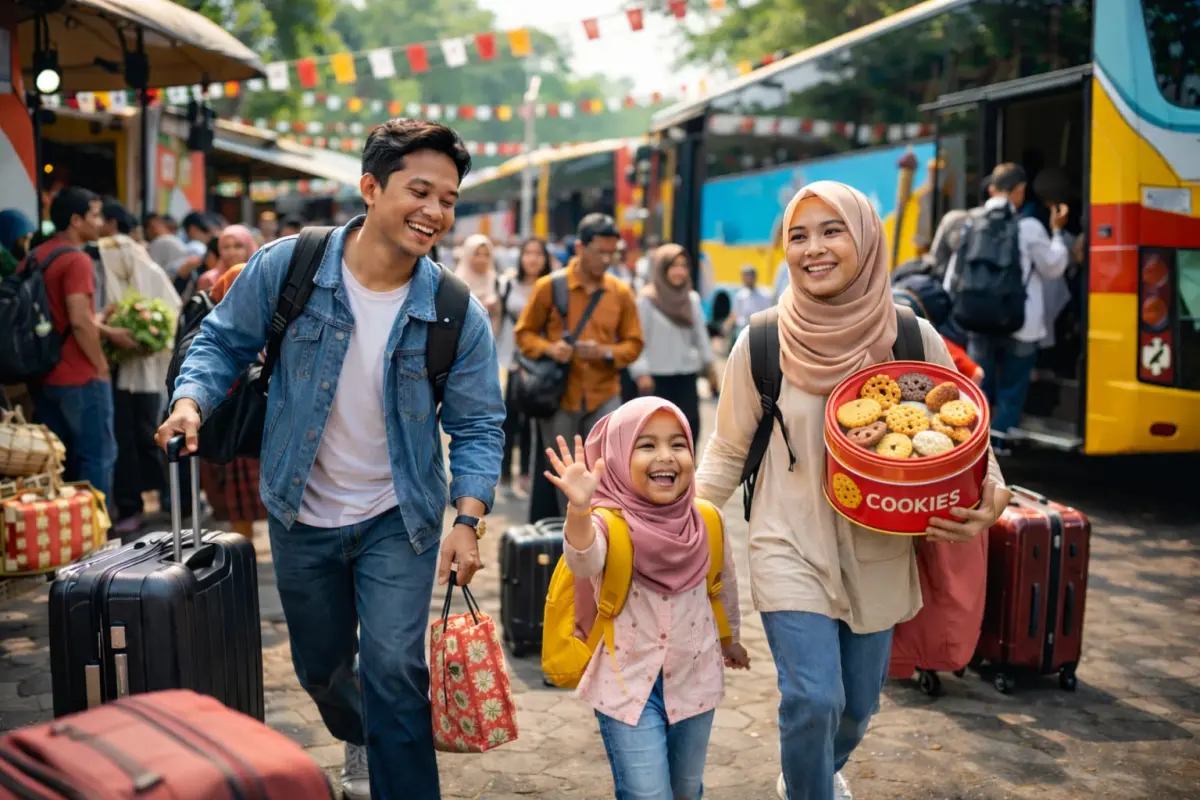
From crowded airports to long lines at bus terminals and packed highways stretching across the archipelago, mudik transforms Indonesia into a nation on the move. Families travel hundreds or even thousands of kilometers to reunite with parents, grandparents, and relatives they may not have seen for months or even years.
For many urban workers living in big cities like Jakarta, Surabaya, or Bandung, mudik is the most meaningful moment of the year. The journey home symbolizes gratitude, respect for elders, and the deep Indonesian value of maintaining family ties.
A Worth Long Journey
Transportation hubs begin filling up days before Eid. Travelers carry suitcases, gift packages, and boxes of traditional cookies intended for relatives back home. Despite traffic congestion and long travel times, the spirit of mudik remains joyful and hopeful.
Beyond logistics, mudik represents an emotional return to one’s roots. Villages across Indonesia come alive again as people who migrated to cities finally return to the houses where they grew up.
Rina Setiawati, a 32-year-old office worker in Jakarta who returns to Central Java every year, described the moment she arrives in her hometown as something deeply moving.
“No matter how tiring the trip is, when I see my parents waiting at the door, everything feels worth it,” she said. “Mudik reminds me that family is always the most important place to come back to," she said.
Moments to Bond
The tradition also reflects the deeper meaning of Eid itself. After a month of fasting, reflection, and prayer during Ramadan, Indonesians use this time to seek forgiveness and strengthen relationships.
Once the long journey ends, mudik culminates in one of the most touching moments of Eid morning. Family members gather together, exchange embraces, and say the heartfelt phrase “mohon maaf lahir dan batin,” asking forgiveness for past mistakes.
Across Indonesia, mudik continues to evolve as transportation infrastructure improves and digital technology makes travel planning easier. Yet the essence of the tradition remains unchanged.
More than just a journey across distances, mudik is a journey back to identity, belonging, and love.
In Indonesia, going home during Eid Al-Fitr is not simply a tradition—it is a reminder that no matter where life takes people, their roots will always call them back. (*)
Simak breaking news dan berita pilihan TIMES Indonesia langsung dari WhatsApp-mu! Klik 👉 Channel TIMES Indonesia. Pastikan WhatsApp kamu sudah terpasang.
Berita ini juga tayang di portal nasional
Baca versi lengkapnya di jaringan nasional kami.
